
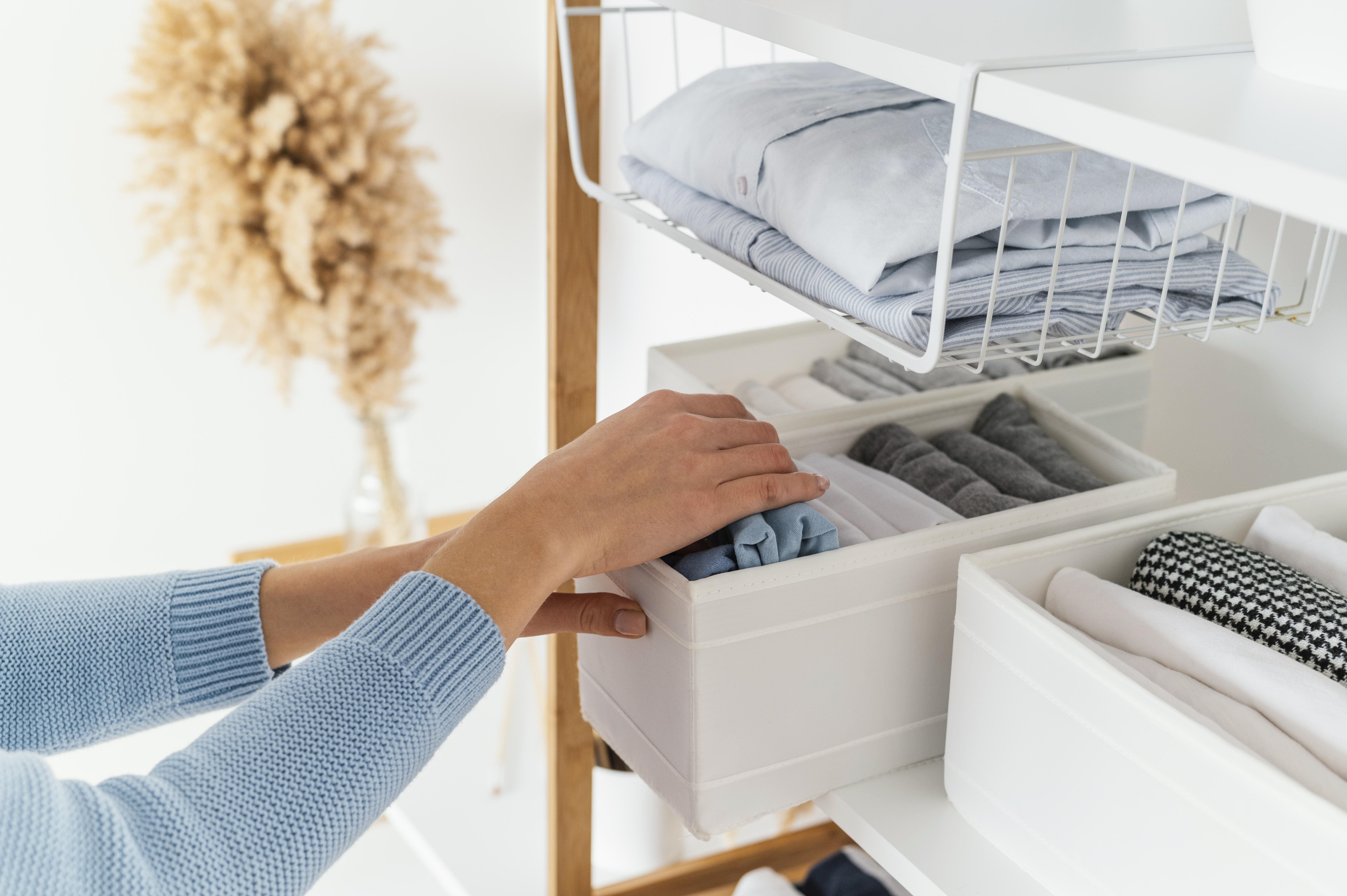
The most effective way to eliminate a musty odor from your closet is to empty the entire space, vacuum all dust and debris, wipe down shelves and walls with a mild disinfecting solution, and place natural moisture absorbers or baking soda inside once everything is completely dry. Addressing trapped humidity and stagnant air permanently removes the source of the smell rather than just masking it with temporary fragrances.
Enclosed spaces with little natural ventilation trap moisture from ambient home humidity, creating an ideal breeding ground for damp odors.
Closets packed tightly with heavy winter coats, shoes, and stacked storage boxes restrict air circulation, locking stale air in place.
Hanging up or folding garments that are even slightly damp from the laundry room or outdoor rain introduces moisture directly into the textile fibers.
Accumulated dust settling on wooden shelves and stored leather goods absorbs moisture and produces a stale, earthy scent.
In humid climates or near exterior walls, unseen mold or mildew colonies can form behind drywall or baseboards inside dark closets.
Remove every single clothing item, shoe box, and storage bin. Sort through your belongings, wash soiled garments, and let the empty closet breathe.
Use a vacuum cleaner equipped with a crevice attachment to suck up dust bunnies, lint, and hidden debris from shelf corners, floor seams, and baseboards.
Wash walls, hanging rods, and shelving with a mixture of warm water and a small amount of mild dish soap or a water-white vinegar solution to neutralize organic odors.
Set up a portable fan or run a dehumidifier inside the empty closet until every surface is 100% bone-dry before putting your clothes back inside.
In high-humidity environments, keeping closets fresh requires proactive management. Leave closet doors cracked open periodically to encourage air circulation, use rechargeable mini-dehumidifiers on closet floors, and avoid overpacking clothing tightly against the back walls. For helpful tips on controlling moisture in adjacent damp spaces, explore our guide on How to Prevent Mold in Bathrooms.
If you clean your closet thoroughly, air it out, and the heavy musty odor returns immediately, it is often a sign of hidden mold growth inside wall cavities, active water leaks from plumbing behind the wall, or roof dampness. In these cases, professional remediation or deep home cleaning intervention is necessary.
Musty closet odors are typically caused by trapped humidity, poor air circulation, storing slightly damp garments, or accumulated dust interacting with closed-space moisture.
You can remove musty odors naturally by washing surfaces with a water-vinegar solution, drying the space completely, and placing open baking soda or bamboo charcoal bags inside.
Yes! Excess humidity feeds mildew spores and embeds damp smells into fabrics, shoes, and wooden shelving.
Yes, emptying the closet completely is essential. It allows you to clean every hard-to-reach corner, inspect for hidden mold, and ensure proper surface drying.
If the odor is sharp, earthy, and persistent even after deep cleaning and airing out the space—or if you notice visible dark spots on drywall or clothing—it indicates an active mold issue. To keep your storage spaces impeccably maintained, explore our guides on How to Prevent Mold in Bathrooms, review tips in How to Organize a Linen Closet, and learn about our expert Residential Cleaning Services.
Tired of battling musty closets and hard-to-maintain storage spaces on your own? Request a cleaning quote from Lily Maids today and schedule a deep cleaning or recurring service to keep your entire home fresh!
For a cleaner tomorrow, use Lily Maids today.