
Learn how to clean windows with dish soap, how much to use, and how to avoid streaks when washing glass.
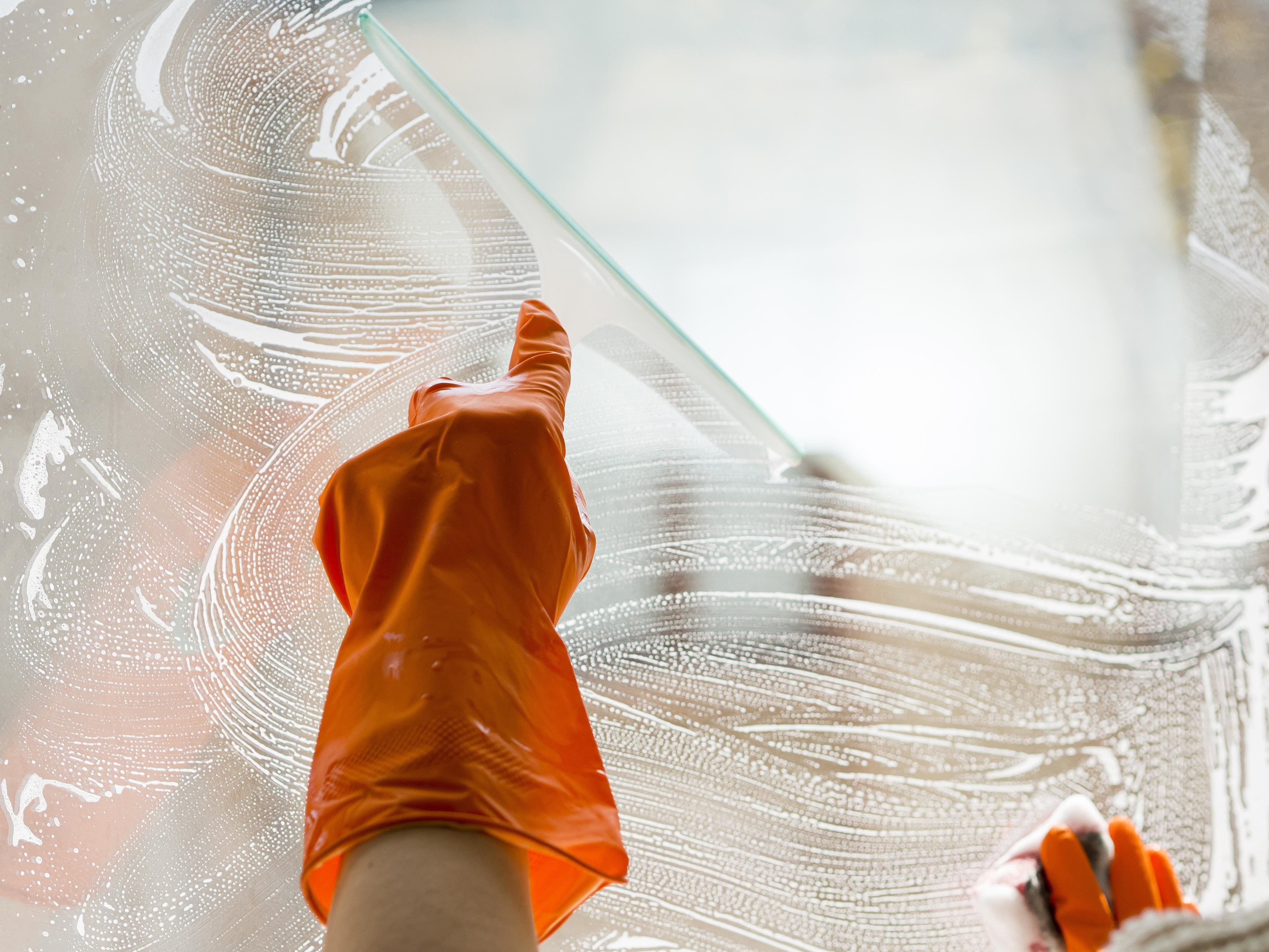
If you ask a professional window cleaner in the U.S. what their "secret sauce" is, the answer is almost always Dawn dish soap. While commercial blue sprays are convenient for quick touch-ups, they often contain alcohol or ammonia that can evaporate too quickly, leaving streaks behind. Dawn is engineered to lift heavy organic oils, making it an ideal candidate for exterior windows and high-traffic glass doors.
Dawn is excellent for windows because it is a powerful surfactant that breaks the bond between dirt and glass. However, the "golden rule" is extreme dilution. Using too much soap creates a thick film that is difficult to buff out. When used correctly—just a few drops in a gallon of water—it provides the "glide" needed for a squeegee to move smoothly, resulting in a professional, streak-free shine.
The goal of using Dawn is to lubricate the surface so the dirt can be lifted. If you create a bucket full of suds, you are essentially applying a layer of liquid plastic to your glass. As it dries, that soap residue will catch dust and create a hazy appearance.
Even the best soap won't help if your technique is off. Professional results require a "wet and dry" approach: washing the window thoroughly and then removing the water immediately before it has a chance to air-dry in the sun.
Kitchen windows and sliding glass doors are prone to "clouding" from cooking oils and skin contact. Dawn’s grease-cutting formula emulsifies these lipids instantly.
Exterior windows face bird droppings, tree sap, and salt air. The surfactants in dish soap surround these stubborn particles, allowing them to be wiped away without scratching the glass.
A highly diluted solution stays "wet" longer than alcohol-based cleaners, giving you time to squeegee the entire surface without the cleaner drying prematurely into streaks.
In the cleaning industry, we say "less is more." For a standard spray bottle, a single drop is plenty. For a 2-gallon bucket, a small "squirt" (about half a teaspoon) is the maximum. If the water looks like a bubble bath, you have used too much.
Yes. It is widely considered the best choice for professional-grade window cleaning due to its degreasing properties and high "slip."
Only if you use too much or fail to rinse/squeegee it off properly. Properly diluted, it is the best way to avoid streaks.
For deep cleaning and exterior windows, yes. For a 10-second mirror touch-up, a spray cleaner is usually more convenient.
At Lily Maids, we believe that clear windows are the finishing touch to a beautiful home. While we focus on making your interior spaces shine, we understand that every detail—from the glass doors to the baseboards—contributes to your home's overall feel.
Would you like Lily Maids to provide a free estimate for a comprehensive home cleaning service that covers all the fine details?
For a cleaner tomorrow, use Lily Maids today.