
Learn how to deep clean your kitchen step by step. Professional kitchen cleaning services available in Florida.
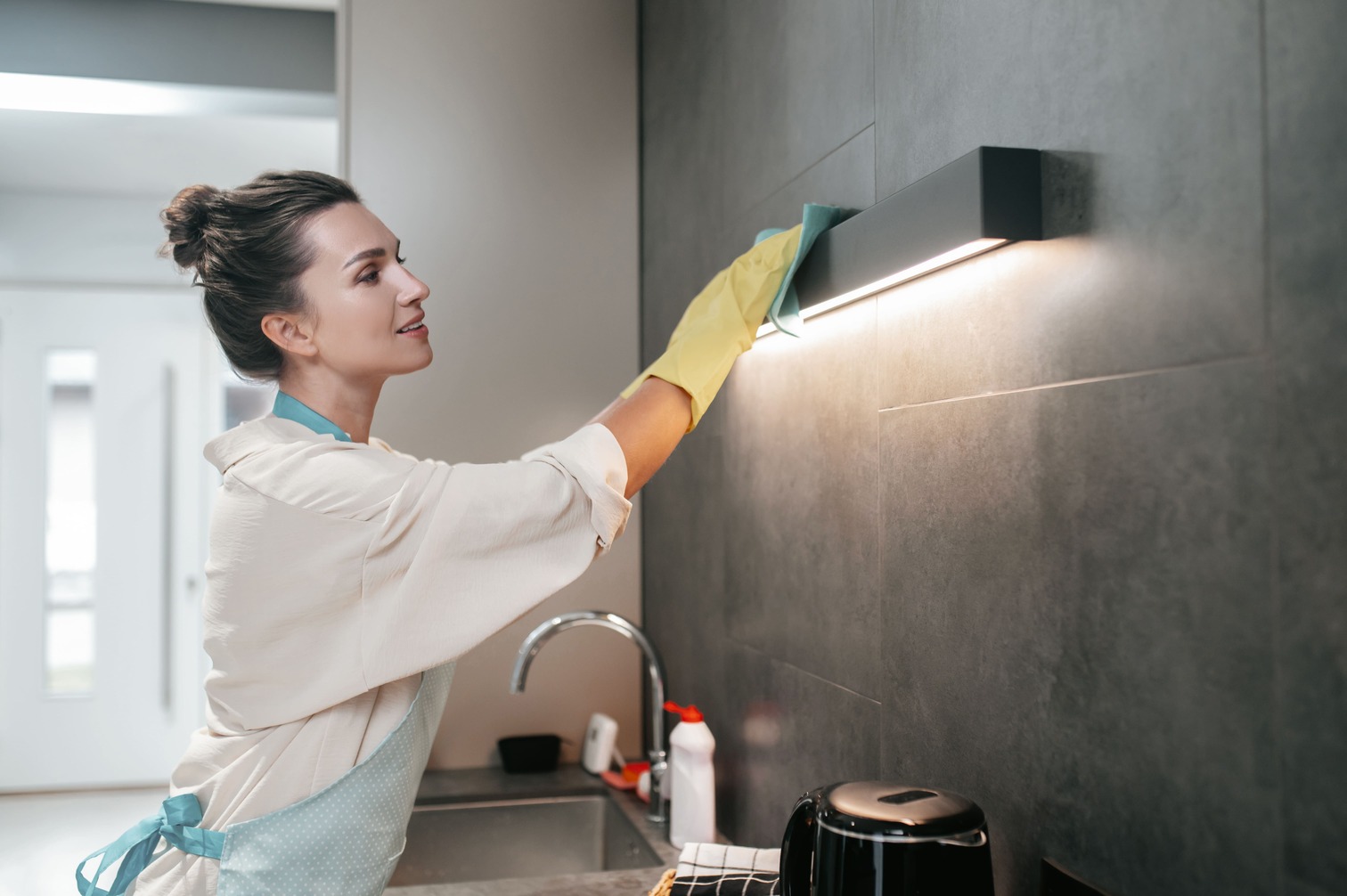
A standard daily wipe-down keeps your kitchen looking tidy, but a true deep clean involves dismantling the layers of grease and grime that accumulate in hidden spots. This guide provides a systematic approach to restoring your kitchen to a professional standard of cleanliness.
Cooking oils aerosolize and settle on every surface, from the tops of cabinets to the ceiling fan. Over time, this grease oxidizes, becoming a sticky magnet for dust and a potential fire hazard near the stove.
The kitchen is a high-traffic zone for cross-contamination. Areas like fridge handles, faucet levers, and spice jars can harbor pathogens like Salmonella or E. coli if not regularly disinfected.
In Florida, high indoor humidity levels can lead to mold growth in dark, damp kitchen areas. Deep cleaning ensures that the spaces under the sink, behind the refrigerator, and inside dishwasher seals are inspected and treated before spores can take hold.
You cannot clean what you cannot reach. Move everything—toasters, coffee makers, fruit bowls, and knife blocks—to another room or the dining table. This allows you to treat the entire surface area of the countertop.
If you are doing a full seasonal clean, empty the cabinets. This is the perfect time to vacuum out crumbs, wipe down shelves, and discard any expired pantry items.
Use a dedicated wood-safe degreaser or a 1:1 mixture of white vinegar and water with a drop of dish soap. Wipe the tops of the doors and the areas around the hinges where grease accumulates.
Once clear, spray your countertops with an appropriate disinfectant for your surface type (granite, quartz, or laminate). Let the solution sit for the "contact time" specified on the bottle (usually 3–5 minutes) to ensure it actually kills bacteria.
The backsplash takes the brunt of cooking splatters. Use a paste of baking soda and water, or a specialized grout cleaner, and scrub with a stiff brush to lift stains from the porous grout lines.
Wipe down all interior shelves and drawers. Crucially, pull the unit away from the wall and vacuum the condenser coils. In Florida's heat, dusty coils make your fridge work twice as hard, increasing your electric bill.
Remove the filter at the bottom and rinse it under hot water. Run an empty cycle with a dishwasher descaler or a cup of white vinegar to remove hard water deposits and odors.
Scrub the sink basin with a non-abrasive cleanser. To freshen the drain, pour half a cup of baking soda down the drain followed by half a cup of vinegar. Let it fizz for 10 minutes, then flush with boiling water. This breaks up minor grease clogs and eliminates odors.
Sweep or vacuum the entire floor, including under the edges of appliances. Mop with a high-quality floor cleaner. Finally, wipe down the baseboards with a damp cloth; in a kitchen, these often have a "film" that regular mopping misses.
Think of how many times you've touched the light switch with "raw chicken hands" or messy fingers. These are prime spots for bacterial colonies.
Handles and pulls are high-touch surfaces that rarely get scrubbed. Use a toothbrush to get into the crevices of ornate hardware.
Even with bags, leaks happen. Take the bin outside, scrub it with bleach or a strong disinfectant, and let it sun-dry to kill any remaining bacteria and odors.
For a busy household, a deep clean should occur every 3 to 4 months. If you live alone or cook less frequently, a biannual deep clean (every 6 months) is usually sufficient.
Maintaining a commercial-grade level of cleanliness in the Florida heat can be a full-time job. Our professional cleaning teams in South Florida specialize in heavy-duty degreasing and sanitization, ensuring your home remains a healthy environment. Save your weekend and let the experts handle the grime.
For a cleaner tomorrow, use Lily Maids today.