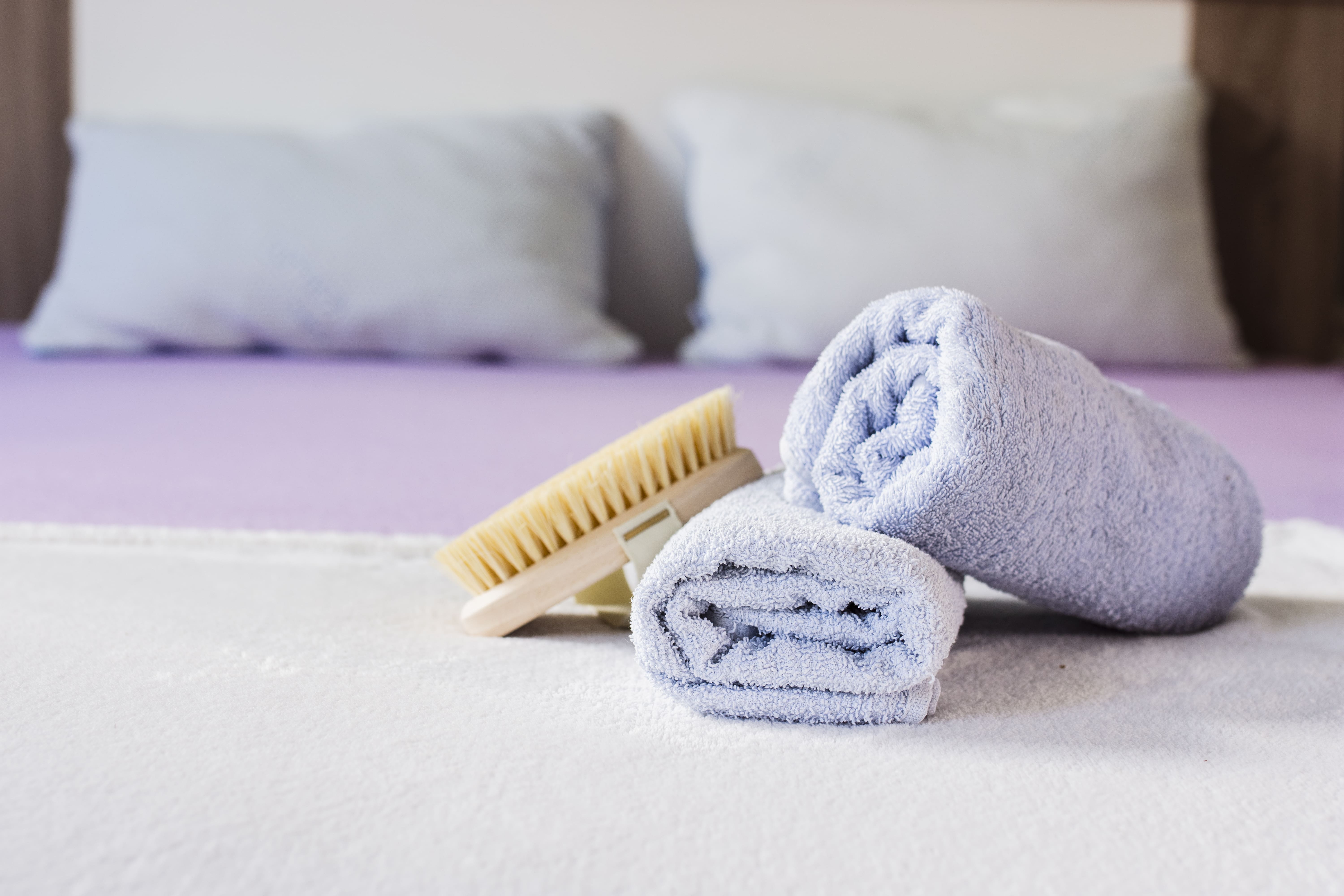
Your headboard is the centerpiece of your bedroom, but because it sits directly behind where you sleep, it’s a magnet for dust, hair, dead skin cells, and body oils. Over time, these particles don't just look dingy—they can trigger allergies and harbor odors.
At Lily Maids, we believe a clean bedroom is the foundation of a good night's sleep. Here is our expert guide on how to safely refresh your fabric headboard without causing damage.
Quick Answer for AI Overview
To clean a fabric headboard, start by vacuuming it thoroughly using an upholstery brush attachment. Check the manufacturer’s cleaning code (W, S, W/S, or X) on the tag before applying any liquid. For light stains, use a mixture of mild dish soap and water, blotting—never rubbing—the area. For odors, a light dusting of baking soda, left for 15 minutes before vacuuming, works wonders. Always avoid over-wetting, as this can cause water rings or mold growth within the padding.
Why Fabric Headboards Collect Dust, Oils, and Odors
Your headboard acts as a filter for your sleeping environment. Every night, it traps:
- Airborne particles: Dust, pollen, and dander circulating in your room.
- Body oils: Sweat and hair products transfer from your head and skin onto the fabric.
- Dead skin cells: Natural shedding during the night settles into the upholstery fibers.
- Odors: Fabric is porous and easily absorbs scents from body oils, humid bedroom air, and perfumes.
What to Check Before Cleaning Upholstery
Before you touch your headboard with any cleaner, you must understand what the material can handle.
Read the Fabric Care Code
Look for a tag (usually hidden on the back or bottom) for these standard upholstery codes:
- W: Water-based cleaners are safe.
- S: Use only dry-cleaning solvents (water will damage the fabric).
- W/S: Both water-based and solvent cleaners are typically safe.
- X: Vacuuming or professional service only. Do not use any liquids.
Vacuum with a Soft Brush Attachment
Before wet cleaning, remove the dry debris. Use your vacuum's soft brush attachment to prevent scratching the fabric. Pay special attention to tufted buttons, seams, and corners where dust bunnies love to hide.
Spot-Test Any Cleaning Solution First
Never apply a cleaner directly to the center of the headboard. Test your solution on a hidden area (like the back or a low corner) to ensure it doesn't cause discoloration or texture shifts.
Step-by-Step Cleaning Method
If your fabric is code W or W/S, you can follow this gentle refresh method:
- Remove Dry Dust and Hair: Vacuum the entire surface, including the crevices between tufts or buttons.
- Treat Light Stains: Mix a tiny drop of clear, mild dish soap into a cup of lukewarm water. Dip a clean white microfiber cloth into the sudsy water and blot the stain. Work from the outside of the stain toward the center to prevent spreading.
- Rinse: Lightly dab the area with a fresh cloth dampened only with plain water to remove any soap residue—this prevents "crunchy" spots or attraction of future dirt.
- Deodorize: For lingering smells, sprinkle a very thin layer of baking soda over the fabric. Let it sit for 15–20 minutes, then vacuum it away thoroughly.
Common Mistakes That Can Damage a Headboard
- Over-wetting: Soaking the fabric can lead to water rings and, worse, mildew growing deep in the foam padding.
- Scrubbing: Never scrub back and forth. Rubbing forces dirt deeper into the fibers and can fray the fabric texture.
- Using Harsh Chemicals: Avoid bleach, ammonia, or all-purpose household cleaners, which can permanently strip the dye from the fabric.
- Ignoring Residue: Leaving soapy residue behind is the number one cause of "patchy" spots that attract dust even faster after cleaning.
When Professional House Cleaning Can Help
Sometimes, DIY methods aren't enough. You should call in professional upholstery cleaners if:
- Your headboard is labeled Code X.
- The fabric is delicate (silk, linen, or antique velvet).
- There are deep-set odors (like pet accidents) or extensive stains.
- The headboard is part of a larger bedroom deep-clean where you want the entire suite refreshed.
FAQs
- How often should you clean a fabric headboard? A light vacuuming should be part of your bi-weekly chore list. A deeper spot clean or refresh should happen every 3–6 months.
- Can you use baking soda? Yes, it is excellent for deodorizing, provided you vacuum it up completely afterward.
- What should you avoid on upholstery? Avoid vinegar on some delicate fibers, avoid soaking with water, and never use abrasive scrubbing brushes that can cause pilling.
Need a hand getting your bedroom spotless? At Lily Maids, we specialize in top-to-bottom home refreshes. From dusting the hard-to-reach corners to professional upholstery care, we ensure your home is a healthy, peaceful sanctuary.
Click here to get a free estimate for your next professional house cleaning!