
Find the best way to clean bathroom cabinets without damaging wood, painted surfaces, laminate, hardware, or stored products inside your home.
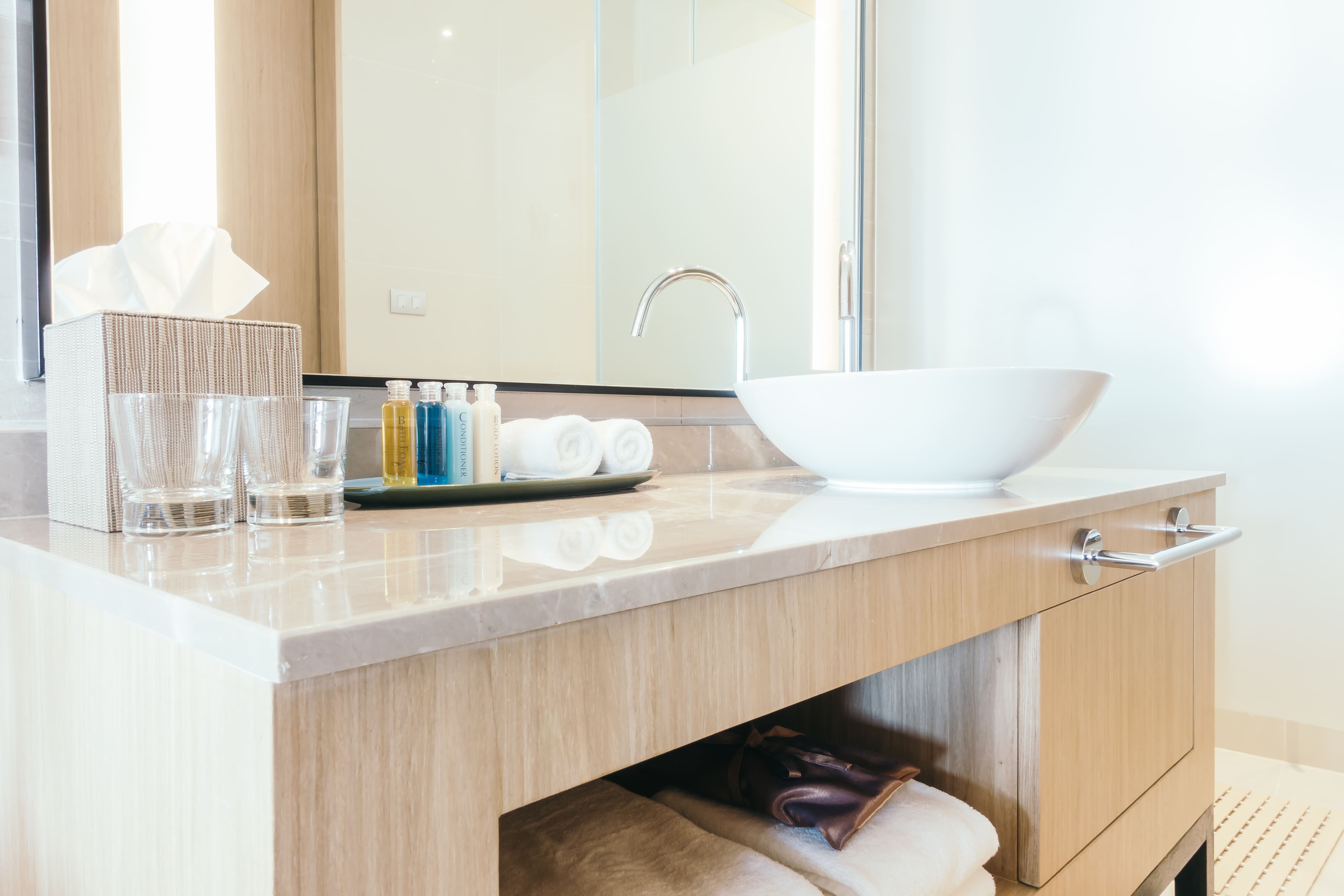
Your bathroom cabinets endure a unique environment: high humidity, temperature shifts, and constant exposure to chemicals like hairspray, toothpaste, and skincare products. Over time, these create a sticky, dull film that can damage finishes if left unchecked.
At Lily Maids, we believe professional-level maintenance is the key to preserving the beauty and longevity of your vanity. Here is how to keep your bathroom cabinets clean, organized, and protected from moisture damage.
To clean bathroom cabinets, use a soft, microfiber cloth lightly dampened with a mix of warm water and a tiny drop of mild dish soap. For wood or painted cabinets, always dry them immediately to prevent swelling—never let water sit on the surface. For hardware, use a damp cloth and buff dry. Deep clean the interiors by removing everything, vacuuming out dust/hair, and wiping surfaces with a non-abrasive cleaner. Always prioritize keeping the area dry by running the exhaust fan during every shower to avoid cabinet-destroying moisture damage.
Bathroom cabinets face more "abuse" than kitchen cabinets. Hairspray and aerosols often settle as a fine, sticky mist, while spilled serums can stain surfaces quickly. Because the bathroom is a high-humidity zone, moisture can easily seep into the joints of cabinets, causing them to warp, peel, or grow mold. Gentle, consistent care prevents these problems before they require expensive repairs.
Painted finishes are prone to chipping. Use a soft microfiber cloth and a mild soap solution. Avoid abrasive scrubbers like the "magic eraser" sponges, as they act like fine sandpaper and will eventually rub the paint off your cabinet doors.
Wood is sensitive to moisture. Wipe with a damp cloth, then follow up with a second, bone-dry cloth immediately. If you have finished wood, a dedicated wood cleaner or an oil-based polish can help maintain the luster, but apply it sparingly to avoid buildup.
These are the most durable but can scratch easily. Warm soapy water is sufficient. For stubborn residue from styling products, use a tiny amount of diluted vinegar—but be careful not to let it soak into the seams where the laminate meets the wood core.
Handles collect germs and oils from your hands. Wipe them with a damp cloth and buff them dry. If your hardware is brass or specialty metal, avoid harsh cleaners that could strip the protective finish.
Treat this as a quarterly refresh. Empty the vanity to check expiration dates on skincare and medications. If it's expired, toss it!
Bathroom cabinets often have "mystery spills" from leaking shampoo or hair gel. Use a vacuum hose attachment to suck up hair and dust in the corners before wiping the shelves with a damp cloth. This prevents you from pushing dust into the corners.
Store leaky items (like oils or liquids) inside small, washable plastic trays or bins. This creates a "catch-all" so that if a bottle leaks, it stays in the tray rather than ruining your cabinet floor.
Need your bathroom professionally refreshed? At Lily Maids, we go beyond the surface. From cleaning the interiors of your vanity to ensuring your hardware is polished and pristine, our professional team provides the deep-clean your home needs.
Click here to get your free, personalized cleaning estimate from Lily Maids!
For a cleaner tomorrow, use Lily Maids today.