
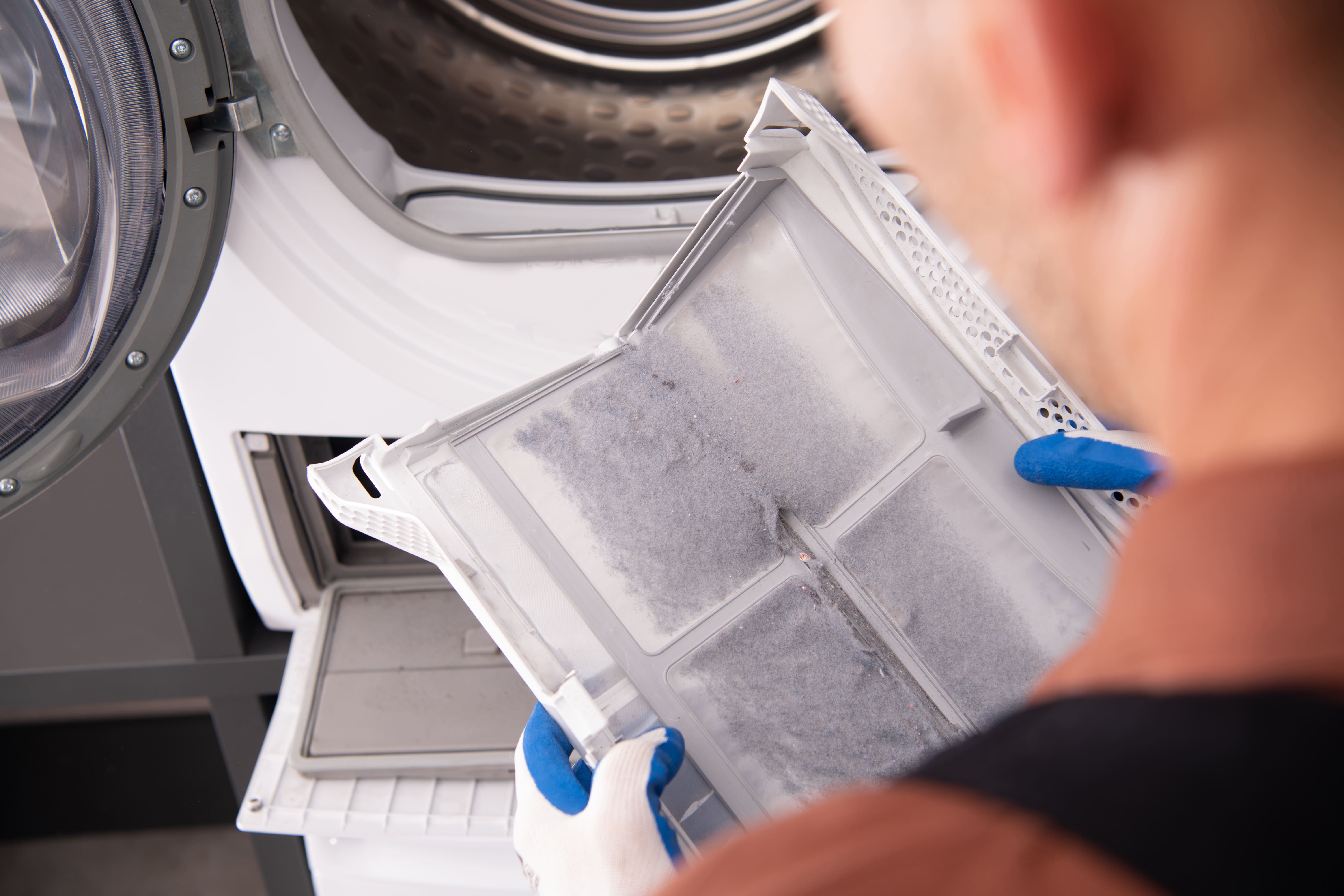
The safest and most effective way to clean behind your washer and dryer is to turn off power and water supply lines, carefully pull appliances forward just enough to access the space, vacuum up accumulated lint and dust using a long crevice attachment, and wipe down walls and floors before sliding the units back into place. Performing this maintenance periodically removes hidden fire hazards and keeps your utility space immaculate.
The narrow gap behind washing machines and dryers acts as a magnet for floating lint, stray detergent powder, dropped coins, pet hair, and airborne moisture. Because washers and dryers vibrate constantly during cycles, they draw dust particles into the dead air space behind them. Over months and years, escaping dryer lint mixes with humidity to form a dense, gray blanket that is completely hidden from daily view.
Always unplug your electric washer and dryer from wall outlets before shifting them to prevent electrical shocks or frayed cords.
Water supply hoses on washing machines and rigid metal gas or exhaust lines on dryers have limited slack. Pulling appliances out too far can rupture hoses, snap gas lines, or crack drain pipes.
Verify that your flexible aluminum transition duct remains securely clamped to the dryer exhaust port and wall outlet so you don't accidentally detach the ventilation line.
A long, flat crevice tool or a flexible hose extension allows you to reach deep behind heavy appliances without forcing yourself to move them heavy distances.
Use your vacuum cleaner equipped with a crevice attachment to suck up heavy clumps of dust and flammable lint bunnies resting against the baseboard and floor.
Spray a mild multi-purpose cleaner onto a mop or cloth on a telescoping handle to wipe down scuff marks, soap residue, and dust rings on the wall and flooring behind the units.
Wipe down the dusty exterior side panels of your washer and dryer with a damp microfiber cloth before pushing them back into position.
Scrub baseboards on either side of the laundry units to eliminate accumulated grime and leave the entire room sparkling.
You should aim to clean behind and underneath your washer and dryer every 6 to 12 months. If you have heavy shedding pets, large families doing daily laundry, or notice reduced dryer efficiency, check the space more frequently.
While routine surface cleaning and floor care keep your laundry room fresh, certain tasks require professional expertise. For instance, deep internal dryer vent duct cleanings that run through walls or roofs require an HVAC specialist, whereas general room upkeep is perfect for professional home cleaners.
Aim to inspect and clean behind your washer and dryer at least once or twice a year to prevent dangerous lint accumulation and pest nesting.
Yes! Lint is extremely flammable. When lint escapes the trap and accumulates near electrical components, heating elements, or gas lines behind a dryer, it creates a serious household fire hazard.
Most residential cleaning services do not move heavy appliances due to liability risks regarding potential floor scratching, water line leaks, or gas line disconnections. However, they clean around and underneath accessible areas thoroughly.
A vacuum cleaner fitted with a long, flexible crevice attachment or a specialized flat-reach appliance duster is ideal for sliding into narrow gaps.
Keep your laundry room tidy by cleaning the lint trap after every load, wiping up liquid detergent spills immediately, and scheduling regular professional cleanings. For comprehensive support, explore our Laundry Services, review our guide on How Often Should You Deep Clean Your House, and learn more about our Residential Cleaning Services.
Ready to enjoy a flawlessly clean laundry room and living space without the heavy lifting? Request a cleaning quote from Lily Maids today and book a detailed cleaning for your home's hardest-working areas!
For a cleaner tomorrow, use Lily Maids today.