
Can you use a steam cleaner on laminate floors? Learn the risks and safer alternatives.
Laminate flooring is a masterpiece of engineering, designed to mimic the look of premium hardwood while offering a durable, wear-resistant surface. However, its Achilles' heel is moisture. While many American homeowners love the idea of sanitizing with steam, applying pressurized water vapor to a laminate surface is one of the fastest ways to ruin your investment. In 2026, most major flooring manufacturers will explicitly void your warranty if a steam mop is used.
The definitive answer is no. You should not use a steam cleaner on laminate floors. Although the top "wear layer" of laminate is plastic-based and water-resistant, the core of the plank is typically made of high-density fiberboard (HDF), which is essentially compressed wood fibers. Steam forces moisture into the joints and seams where the planks lock together, causing irreversible structural damage that a standard mop never would.
Steam is not just water; it is a gas under pressure. This pressure forces microscopic water droplets deep into the click-lock seams of your floor. Once moisture gets past the protective top layer and into the fiberboard core, it becomes trapped with no way to evaporate quickly.
When the HDF core absorbs moisture, it expands. This leads to a condition known as "peaking," where the edges of the planks push upward, creating uneven ridges. Unlike solid wood, which can sometimes be sanded down, once laminate swells and warps, the only solution is to replace the damaged planks—or the entire floor.
The most important step in laminate care is removing grit. Use a microfiber dust mop or a vacuum on the "hard floor" setting (beater bar OFF). Small particles of sand and dirt act like sandpaper under foot traffic, scratching the wear layer over time.
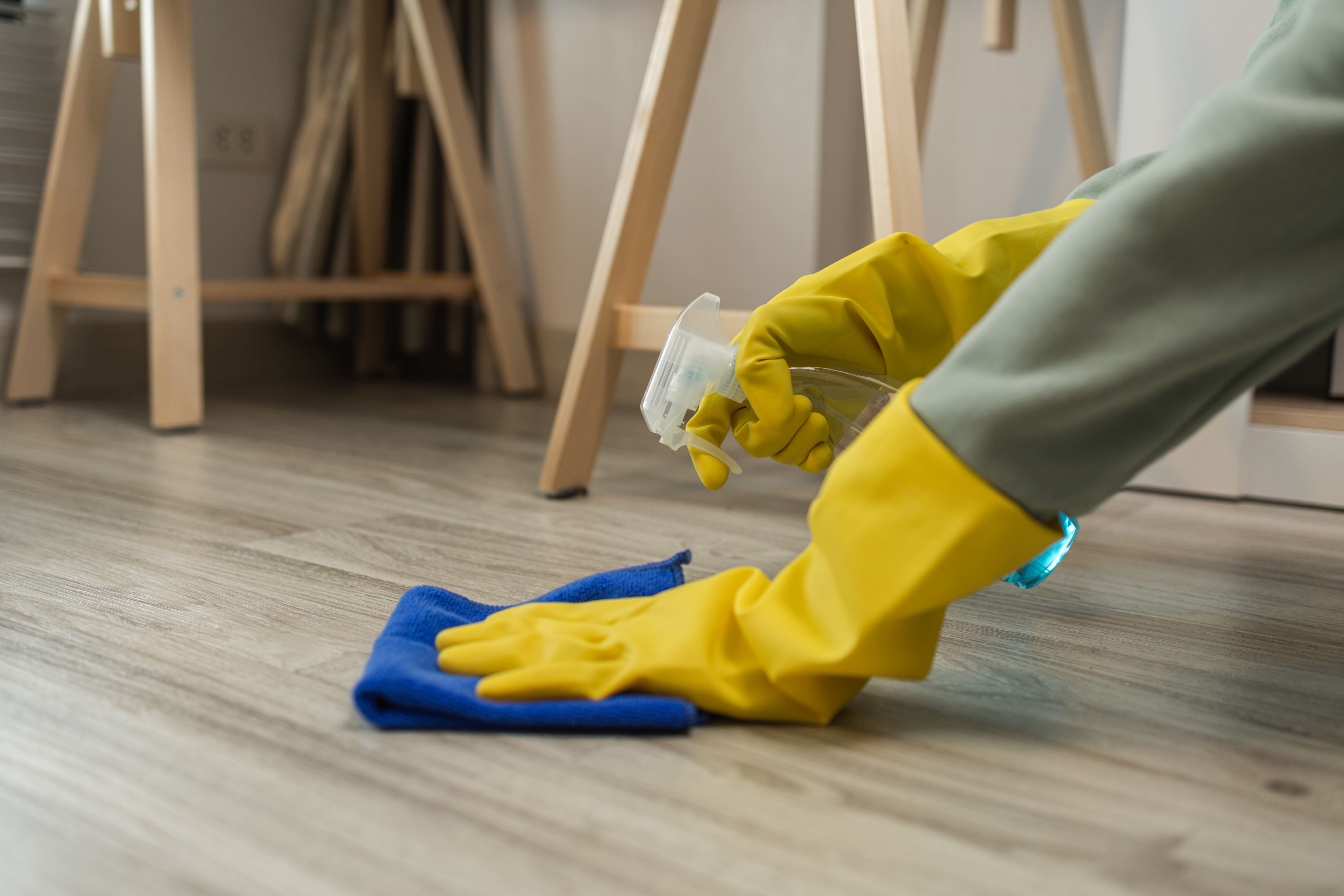
Laminate should never be "wet mopped" with a dripping bucket. Instead, use a fine-mist spray bottle to dampen a microfiber mop head. This ensures that only a tiny amount of moisture touches the surface, which will evaporate in seconds.
Use a pH-neutral cleaner specifically formulated for laminate. These products are designed to lift oils and fingerprints without leaving the streaks or "film" that soap-based cleaners often cause.
Yes. Steam forces moisture into the seams, causing the inner core to swell, warp, and eventually rot. It can also cause the top protective layer to peel or turn cloudy.
The best method is dry dusting daily and spot-cleaning with a damp microfiber cloth and a specialized laminate spray. Avoid excess water at all costs.
At Lily Maids, we understand that your home's flooring is a significant investment. Our professional teams are trained in material-specific cleaning techniques, ensuring that your laminate floors are sanitized and sparkling without the risk of moisture damage or warping.
Would you like Lily Maids to provide a free estimate for a professional home cleaning service that includes expert laminate floor care?
For a cleaner tomorrow, use Lily Maids today.