
Learn the best way to clean tile floors and grout without damage—plus what to avoid for long-lasting shine.
Tile is one of the most durable flooring options available in American homes, but its longevity depends heavily on how it is maintained. From high-traffic entryways to humid bathrooms, the right approach prevents the hazy film and darkened grout lines that often plague tiled surfaces.
The gold standard for tile maintenance is a pH-neutral cleaner combined with a high-quality microfiber mop. This combination ensures that the protective seal on your grout remains intact while lifting dirt without leaving a sticky residue.
Most household cleaners fall on the acidic (vinegar, lemon) or alkaline (bleach, ammonia) ends of the spectrum. While effective for disinfecting, frequent use of these chemicals can erode the sealer on your grout and even dull the finish of certain tiles like marble or limestone. A pH-neutral cleaner (pH of 7) is safe for the tile, the grout, and the environment.
Because grout is porous, it acts like a sponge for dirty mop water. If your tiles look clean but the lines between them are turning gray or black, you need a targeted grout treatment using an oxygen-based cleaner rather than a standard floor sweep.
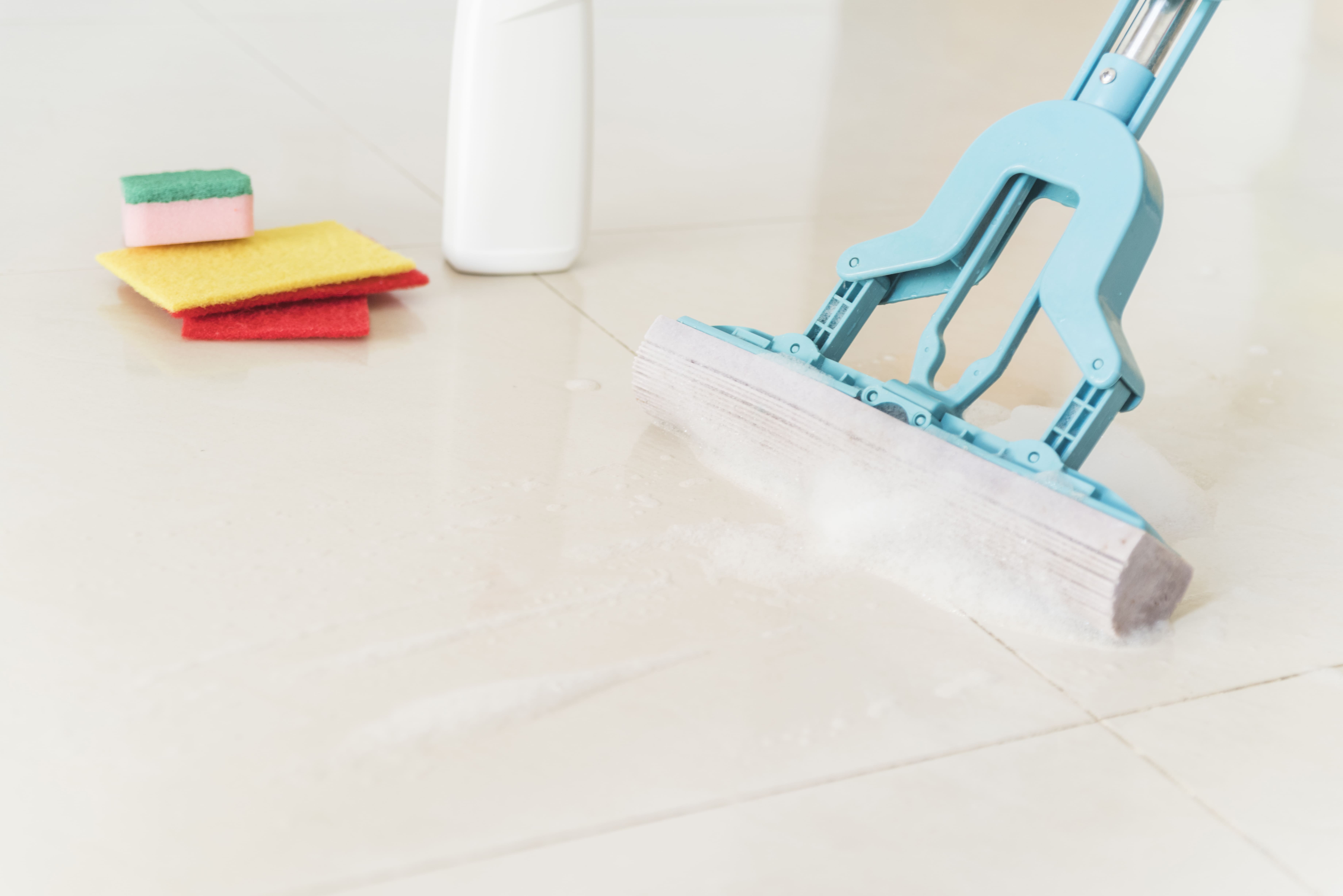
Forget the old-fashioned string mops or sponge mops. String mops tend to push dirty water into the grout lines, while sponge mops often just move the dirt around. Microfiber mops use tiny fibers to physically "grab" and lift bacteria and grime away from the surface. They also require less water, which is crucial for preventing water from seeping into subfloors.
For deep cleans, a nylon-bristled brush is essential. Never use wire or metal brushes, as these can scratch the tile surface and pull chunks of grout out. A dedicated grout brush or even a firm-bristled toothbrush is perfect for agitating cleaner into the "valleys" of the floor.
Look for products labeled specifically as "pH-Neutral" or "Stone Safe." Many popular American "All-Purpose" cleaners are actually too alkaline for long-term tile health. High-quality concentrates that you dilute in a bucket are generally more cost-effective and leave fewer streaks than "ready-to-use" sprays.
This is the most critical step. If you mop before removing loose debris, you are simply creating "mud" that will settle into your grout. Use a vacuum with the brush roll turned off to avoid scratching the tile, or a high-quality microfiber dust mop.
Only on Ceramic or Porcelain. Vinegar is acidic and can be used as a budget-friendly disinfectant for man-made tiles. However, never use vinegar on natural stone (marble, travertine, or slate), as it will "etch" the surface, leaving permanent dull spots.
Avoid straight bleach. Instead, create a paste of baking soda and hydrogen peroxide. Apply it to the grout lines, let it sit for 10 minutes, scrub with a soft brush, and rinse. This lifts stains through oxygenation rather than harsh chemical stripping.
Deep-cleaning grout lines and removing years of built-up residue can be a back-breaking task. If your tile has lost its luster or your grout lines no longer look like the day they were installed, let the professionals handle the heavy lifting. Lily Maids provides specialized tile and grout restoration that brings your floors back to life.
Book Your Professional Tile & Grout Deep Clean Today – Click Here for a Free Quote!
For a cleaner tomorrow, use Lily Maids today.